
TEAS 7 Science Practice 1 Quiz
Practice 1
-
Select all the muscle(s) controlled by the autonomous nervous system.
A. Hamstrings
B. Heart
C. Stomach
D. Urinary bladder
Correct Answer
B, C, D
Option A is incorrect; hamstrings are skeletal muscles under the voluntary control of the somatic nervous system.
Options B, C, and D are correct. All these internal organs are under the involuntary control of the autonomous nervous system.
The collection of neuronal cell bodies found in autonomous nerves of the peripheral nervous system is called a ____________.
Correct Answer
ganglion
The ganglia are oval shaped structure collection of neuronal cell bodies found in the somatic and autonomous nervous system. They are enclosed in glial cells and are considered to be the relay station for signals to quickly travel from one neuron to another.
Identify the hormones responsible for the release of pancreatic juice and bile.
A. Rennin and cholecystokinin (CCK)
B. Gastrin and rennin
C. Secretin and gastrin
D. Cholecystokinin (CCK) and secretin
Correct Answer
: D
Option A is incorrect; rennin is produced in the stomach of infants to break down milk proteins, whereas cholecystokinin is made in the small intestines.
Option B is incorrect; gastrin and rennin are made in the stomach and have no role in digestion outside the stomach.
Option C is incorrect; Although secretin plays a role in the release of bile, it inhibits the production of gastrin, thereby regulating the osmolarity in the pyloric region.
Option D is correct; CCK increases the gall bladder and pancreas contraction, whereas secretin increases the release of bile from the gall bladder, thus helping release pancreatic juices and bile in the duodenum region.
Additional Info
Many hormones work in a coordinated fashion to regulate the pH in different organs of the alimentary tract. The release of chyme from the stomach into the duodenum is carefully monitored. Chyme in the stomach is highly acidic ( 1.5-3), whereas the duodenum has to maintain a pH of 6 for the normal functioning of the small intestine. The secretin and cholecystokinin (CCK) work together to maintain the pH differential across the pyloric sphincter. The secretin produced by the duodenal cells inhibits gastrin production and, at the same time, increases the release of bicarbonate into the duodenum, thus neutralizing the pH. The release of cholecystokinin further helps this process by contracting the gall bladder and pancreas and releasing bile and pancreatic juices. The release of secretin and CCK is synchronous with the opening of the pyloric sphincter. Thus, the pH across the alimentary tract is maintained for the proper functioning of digestive enzymes.
This membrane-bound organelle folds and transports proteins. It is often covered with ribosomes.
A. Rough Endoplasmic Reticulum
B. Smooth Endoplasmic Reticulum
C. Golgi Bodies
D. Mitochondria
Correct Answer
a
Answer A correct: Endoplasmic reticulum is a membrane-bound organelle that is only found in eukaryotic cells. The rough ER is studded with ribosomes so that as soon as the protein is synthesized it goes right into the ER for proper folding and transport. The rough ER is usually located right up against the nucleus. Its name “rough” refers to how it looks bumpy when visualized with electron microscopy.
Answer B is incorrect: The smooth ER is a membrane-bound organelle that is found in cells that synthesize lipids, such as phospholipids or synaptic vesicles. It’s called “smooth” because it lacks ribosomes on its surface and looks smooth when visualized. Smooth ER is often plentiful in the axons of neurons as it contributes to the building and transportation of synaptic vesicles.
Answer C is incorrect: Golgi bodies are sometimes called Golgi apparatus. They are the same thing. These organelles are membrane bound like other organelles but their job is to modify proteins, usually by adding a lipid or a sugar to them. They ship them out in vesicles to their final destination. They do NOT fold the proteins and they are NOT covered with ribosomes like the rough ER is.
Answer D is incorrect: Mitochondria are usually nicknamed the “powerhouse” of the cell because they can take carbon chains and break them apart as part of the process to produce ATP (cellular energy form). They are membrane-bound; indeed, they are double-membrane bound!! They even have some of their own DNA inside them (about 13 genes are on this DNA). They are not involved in protein production, folding, or transportation.
The endoplasmic reticulum “inside the cytoplasm network” was so named because it could be visualized as a maze of folded membranes, usually nestled up close to the nucleus, but sometimes spreading far and away down a neuronal axon. Sometimes these maze-like membranes looked dotted, so those ones were called “rough” ER. Sometimes they weren’t, and those ones got called “smooth” ER. Further research revealed that the rough ER can receive newly made proteins inside of itself, and it works hard to make sure the proteins are folded properly as they pass through the maze-like tunnels of these membranes. This helps transport the protein toward its next destination, which is often the Golgi Bodies (but not always). The smooth ER functions quite differently. They can synthesize (make) lipids such as phospholipids and cholesterol, which are essential for building cell membranes, lipoproteins, cell signaling molecules, and more.

An enzyme that speeds up the reaction is called _______.
Correct Answer
catalyst
A catalyst is a chemical that participates in the chemical reaction but does not get consumed. Enzymes act as catalysts. They bring down the activation energy needed for the reaction. Thus, speeding up the reaction.
What hormone is responsible for the “fight or flight” response?
A. Acetylcholine
B. Adrenaline
C. Antidiuretic
D. Testosterone
Correct Answer
B
Option A is incorrect; the hormone acetylcholine is responsible for signaling normal skeletal muscle contraction and not directly responsible for fight or flight response.
Option B is correct; the adrenalin produced by the adrenal glands controls the sympathetic responses of the smooth muscles during stressful conditions. This hormone, along with cortisol, forms the body's stress response. It increases the heart rate and blood pressure. It redirects blood flow to the skeletal muscles to make energy and oxygen available to the skeletal muscles to overcome stress.
Option C is incorrect; the ADH stands for antidiuretic hormone, which is secreted by the kidneys and is responsible for controlling the levels of electrolytes and water in the body. The fight or flight response decreases the antidiuretic hormone level, and the body focuses on escaping the stressful situation.
The radius is ____ to the ulna in the anatomical position.
A. Anterior
B. Lateral
C. Medial
D. Superior
Correct Answer
B
Option A is incorrect; in the anatomical position, although the forearm is facing forward ( anterior), the radius is not in front of the ulna but on its outer side.
Option B is correct; in the anatomical position, the forearm is facing forward, so the radius in the forearm is towards the outside or lateral to the ulna.
Option C is incorrect; in the anatomical position, the forearm is facing forward; thus ulna is medial, or towards the insides of the arm, and the radius is lateral or towards the outside of the ulna.
Option D is incorrect; in the anatomical position forearm is facing forward, and the radius and ulna bones are side by side, not superior or inferior with reference to each other.
Learning Objective
Identify the standard anatomical position
Additional Info
In the anatomical position, the forearm is in the supinated position. So the radius, which is a shorter bone lies to the outside of the ulna. Thus it is in the lateral forearm.
The interaction of alleles determines an individual's ________, which represents the genetic makeup for a specific trait.
Correct Answer
genotype
The genotype represents the genetic constitution of an individual, indicating which alleles they possess for a given trait or gene. The alleles can be the same or different for a gene. If they are different, the dominant allele will be expressed. Genotypes represent the specific combination of alleles an individual possesses, and alleles are the different variants of a gene that contribute to genetic diversity and inheritance. The relationship between genotypes and alleles is fundamental to understanding the genetic basis of traits and the inheritance patterns in populations.
Identify the organ that filters blood and regulates blood volume and its chemical makeup.
A. Kidney
B. Liver
C. Spleen
D. Urinary Bladder
Correct Answer
A
Option A is correct; the function of the kidney is to filter the blood and remove metabolic waste, including urea, uric acid, excess ions, and creatine. It reabsorbs most of the water, dissolved sugar, amino acids, and proteins and regulates the amount of solute in the blood plasma. It also secretes hormones that would stimulate red blood cell production (erythropoietin), regulate calcium levels ( calcitriol), and regulate blood pressure ( renin), thus helping regulate blood volume. Finally, the kidneys regulate and maintain blood pH within a narrow range by removing excess hydrogen or hydroxyl ions through a buffering system.
Option B is incorrect; the liver also has a significant role in excretion - it breaks down an excess amino acid in the blood and converts the amine group into urea, as ammonia (NH3) is toxic. It also detoxifies the blood by identifying toxins and then changing them into harmless substances that become part of the bile secretions. But, the liver is not involved in filtering the blood or regulating its volume.
Option C is incorrect; the spleen plays a small role in excretion - it removes degraded red blood cells and other cellular waste in the blood. However, the red blood cell lacks a nucleus and has a life span of 3-4 months. Therefore, the spleen has no role in filtering blood or regulating blood volume.
Option D is incorrect; the urinary bladder temporarily stores urine. It does not filter or regulate the volume of blood.
Parotid, sublingual, and submandibular are parts of __________.
A. Small intestine
B. Stomach
C. Salivary glands
D. Pharynx
Correct Answer
C
Option A is incorrect; the parts of the small intestine are the duodenum, jejunum, and ileum.
Option B is incorrect; the parts of the stomach are the fundus and pylorus
Option C is correct; there are three pairs of salivary glands that produce saliva.
Option D is incorrect; there are three parts of the pharynx - nasopharynx, oropharynx, and laryngopharynx.
Additional Info

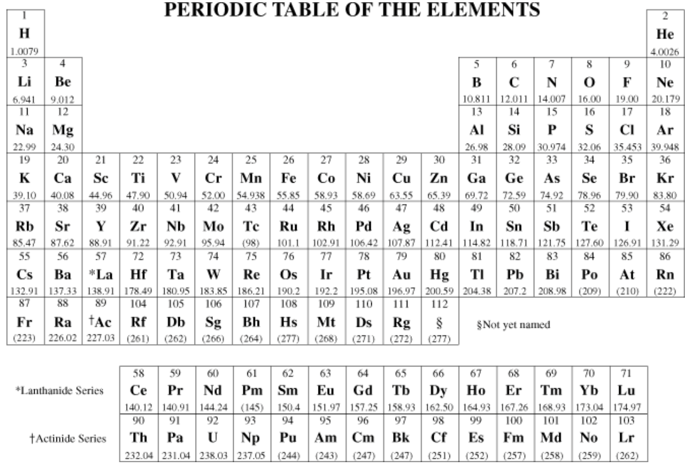
In the periodic table below, which is a true statement?

A. Carbon and silicon are in the same period.B. Oxygen and chlorine both have 7 valence electrons.
C. Potassium and bromine are both noble gases.
D. Calcium and Magnesium are in the same family/group.
Correct Answer
D
Option A is incorrect. Carbon (C) is directly above silicon (Si) in the periodic table. This means they are in the same family (vertical columns). Periods are the horizontal rows on the periodic table.
Option B is incorrect. Based on their location on the periodic table - Oxygen has 6 valence electrons (group/family 6), and chlorine has 7 valence electrons (group/family 7). Chlorine is also in the halogen group, and all of them have 7 valence electrons.
Option C is incorrect. The noble gases are group 8 - they all have full outer shells of valence electrons.
Option D is correct. Calcium and magnesium are both alkaline earth metals, members of group 2.
The gas exchange between the alveoli and pulmonary blood is called the _________.
A. Pulmonary ventilation
B. External respiration
C. Internal respiration
D. Inhalation
Correct Answer
B
Option A is incorrect; pulmonary ventilation refers to air movement in and out of the body.
Option B is correct; external respiration refers to gas diffusion across the alveolar membrane to the capillaries that carry pulmonary blood.
Option C is incorrect; internal respiration refers to the gas exchange between red blood cells and the body's tissues, where oxygen is exchanged for carbon dioxide.
Option D is incorrect; inhalation is breathing air into the lungs.
Learning Objective
Role of respiratory system in gas exchange
Additional Info
External respiration happens in the lungs in the respiratory zone — the alveoli exchanges oxygen for carbon dioxide from the blood in the capillaries. Not to be confused with the internal respiration between the blood and all the rest of the body tissue. Blood exchanges oxygen for carbon dioxide from the tissues.
Select all the statements that are true.
A. Red blood cells placed in pure water will shrink in size as water is hypertonic to the cell.
C. Red blood cells in blood plasma retain their shape and size as they are isotonic.
D. Red blood cells placed in a hypertonic solution shrink and become smaller.
Correct Answer
C and D
Option A is incorrect. Osmosis causes the red blood cells placed in pure water to take in water as the concentration of water inside the cell is less than the pure water surrounding it. Pure water is thus hypotonic to the red blood cell; the cell will swell and increase in size.
Option B is incorrect; isotonic solutions have the same concentrations of solvent. Thus, the red cells will not swell or shrink; they will retain their original shape and size.
Options C and D are correct; blood plasma and red blood cells are isotonic - they have the same water concentration. Thus, the red blood cell retains their shape and size. However, if the red blood cells are placed in hypertonic solutions with more dissolved matter, there will be a net movement of water out of the red blood cell, causing it to shrink in size.
Which one of the following is NOT a substance typically reabsorbed by the kidney?
A. Amino Acid
B. Urea
C. Glucose
D. Sodium
Correct Answer
B
Urea is a by-product of the body's breakdown of excess amino acids or proteins. It is formed in the liver to remove ammonia which is toxic to the human body. Ammonia is formed during various biochemical reactions, and enzymes in the liver convert the ammonia into urea. The primary function of the kidney is to remove urea from the bloodstream. So it is not reabsorbed from the filtrate in the kidney.
Options A, C, and D are incorrect; the body needs glucose, amino acids, and sodium for normal functions. These are reabsorbed by the proximal tubules of the nephron and returned to the blood plasma. Amino acids are reabsorbed by active transport, whereas glucose and sodium are reabsorbed through facilitated transport.
Arrange the given concentrations of hydrogen ions in descending order ( most acidic to least acidic).
0.001 M Hydrogen ion
0.0001 M Hydrogen ion
1 X10^-7 M Hydrogen ion
1 X10^-9 M Hydrogen ion
0.01 M Hydrogen ion
Correct Answer
0.1 M, 0.001 M, 0.0001 M, 1 X 10 -7 M, 1X10⁻⁹ M
Acids are solutions that have a higher concentration of hydrogen ions. The pH of a solution is the negative logarithm of the concentration of hydrogen ions (H+) present in the solution.
0.1M Hydrogen ion => pH of 1
0.01M Hydrogen ion => pH of 2
0.001M Hydrogen ion =>pH of 3
0.0001 M = 1 X10 -4 M Hydrogen ion => pH of 4
1 X10 -7 M => pH 7
Lower pH values indicate higher concentrations of H+ ions (more acidic), and higher pH values indicate lower concentrations of H+ ions (more basic).
Given below is the periodic table. Select all statements that are true about the periodic table.
A. Elements in the same group or family have the same number of valence electrons.
B. Elements in the same period have the same charge when they form ions.
C. Element C with atomic number 6 is more electronegative than Pb with atomic number 82.D. Element K with atomic number 19 is more electronegative than Kr with atomic number 36.
E. Atomic radius will be largest at the bottom left side of the periodic table.
F. Electronegativity will be highest at the bottom left side of the periodic table.
Correct Answer
A, C, E
Option A is correct. The elements in the vertical column, also known as group or family, all have the same valence electron or electrons needed to fill their outmost shell. The need to fill the outermost shell determines chemical reactivity. Thus the elements in a group tend to have similar chemical and physical properties. Electronegativity is the ability of an atom to attract electrons that it needs to fill its outer shell. As we go down a group, the ability to attract electrons to itself decreases. This is because the size of the atoms in a group increases as we go down a group. The protons in the nucleus cannot attract electrons as the atomic size increases. Thus element C ( Carbon), with atomic number 6, is more electronegative than element Pb (lead), with an atomic number 82.
Option B is incorrect; Elements in the same period, arranged in horizontal rows, have a similar atomic number ( they differ by a single digit). However, the valence or number of the electrons in their outermost shell is different; hence they have very different reactivity. Their chemical and physical properties are very different.
Option C is correct. Electronegativity is the ability of an atom to attract electrons that it needs to fill its outer shell. As we go down a group, the ability to attract electrons to itself decreases. This is because the size of the atoms in a group increases as we go down a group. The protons in the nucleus cannot attract electrons as the atomic size increases. Thus element C ( Carbon), with atomic number 6, is more electronegative than element Pb (lead), with an atomic number 82.
Option D is incorrect; Element K and Kr are in the same period or the same horizontal row in a periodic table. As the atomic number increases, the number of positively charged protons increases, thereby increasing the ability of the atom to attract electrons. Thus Kr (Krypton) is more electronegative than K (potassium).
Option E is correct. Electronegativity is highest at the top right side of the periodic table (not including the inert noble gases).
Learning Objective
Use periodic table to explain and predict properties of elements
Additional Info
Periodic table trends:
1. Atomic radius increases as you go down a group, but decreases as you go across a period. So the bottom left will be atoms with the biggest atomic radius.
2. Electronegativity has the opposite trend: it decreases as you go down a group, but increases as you go across a period. So the strongest electron pull comes from atoms on the top right side of the periodic table, not including the family of inert noble gases.
Meiosis is a two-step process. Arrange the steps of Meiosis I in the correct order.
Chromosomes move toward the middle.
Chromatin fibers condense into chromosomes.
Homologous chromosomes are separated into opposite poles.
Homologous chromosomes align together.
DNA fragments are exchanged during crossing over.
Correct Answer
Chromatin fibers condense into chromosomes. → Homologous chromosomes align together. → DNA fragments exchanged during crossing over. → Chromosomes move toward the middle. → Homologous chromosomes are separated into opposite poles.
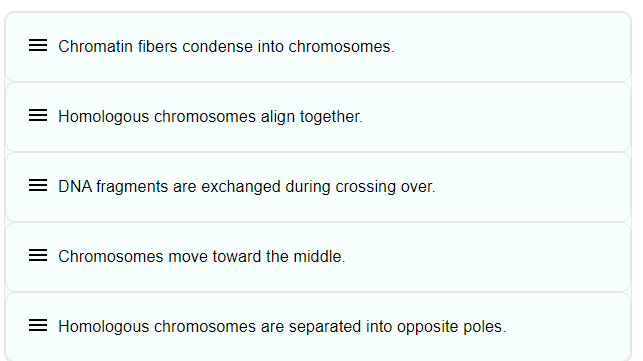
Meiosis happens in two stages. The first stage, called meiosis I, is known as the reduction stage, as the chromosome number is halved during this stage. The steps described in this question are all stages of meiosis I. Meiosis I has a long prophase I stage, which is very different from mitosis and meiosis II. It starts off with the chromatin condensing to form tight bundles of chromosomes. During this process, the homologous chromosomes from the maternal and paternal origin pair up and align. This sometimes leads to the crossing over of small fragments of DNA between the sister chromatids of the aligned homologous chromosome. This exchange of genetic material causes the recombination of alleles and a unique combination of paternal and maternal alleles forms. The condensed homologous chromosome drifts to the center of the cell during metaphase I and arranges itself in the middle equatorial plate. The spindle fiber that extends from the centriole reaches the centromere in the middle of the chromosomes and attaches itself to it. Then the homologous chromosomes are pulled apart during anaphase I. This is the crucial step that leads to the reduction in chromosome number during meiosis. The daughter cells formed at the end of meiosis I have half the number of chromosomes.
Arrange the mutation from the least lethal to the most lethal change it might cause to the protein sequence.
Deletion of a gene.
Insertion of a codon.
Nondisjunction
Silent mutation
Substitution
Deletion of a single base.
Correct Answer
Silent Mutation → Insertion of a codon → Deletion of a single base → Deletion of a gene → Nondisjunction
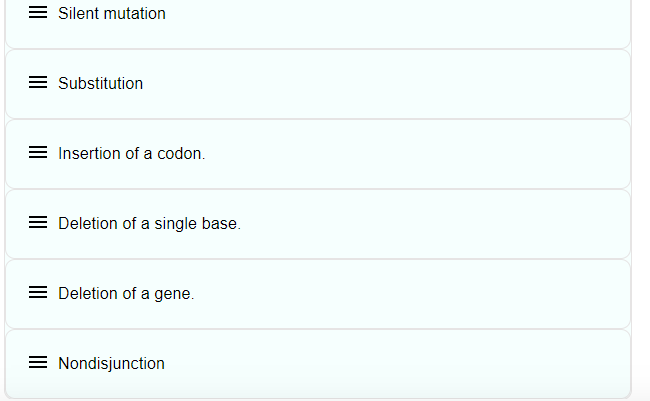
A mutation is a change in the DNA sequence; the change's effect varies from harmless to lethal depending on the mutation. It can be arranged as follows:
- A silent mutation is a change in a base that does not change the amino acid it codes for, making it the most harmless change.
- Substitution - it changes one base in the DNA sequence; depending on the position of the substitution, it might not cause a major change in the amino acid sequence. This is because many codons code for the same amino acids, and the wobble in the 2nd or 3rd position of a base may not change the amino acid sequence.
- Insertion of a codon – adds an amino acid to the protein sequence and changes the protein length, making this more lethal than a substitution mutation. Depending upon the position, the type of amino acid added, and the structural conformation of the protein, it could cause potential changes to the protein sequence.
- Insertion of a single base – this change will cause the reading frame to shift and change all the amino acids in the protein from that point. It is more lethal than inserting an extra amino acid.
- Deletion of a gene – a missing gene is more lethal than a non-functional protein. It could cause developmental problems during embryonic stages, regulatory issues, or block a metabolic pathway from functioning correctly. Many genetic diseases are associated with missing or deleted genes.
- Nondisjunction - It is a form of chromosomal mutation where an entire chromosome is missing, which is a lethal mutation. Another result of nondisjunction is a cell having an extra copy of a chromosome. This is not lethal but results in severe developmental problems, as in Downs syndrome.
Which of the following organs is not matched correctly with its digestive function?
A. Mouth, mastication
B. Pharynx, deglutination
C. Large intestine, haustration
D. Rectum, maceration
Correct Answer
D
Option A matches the mouth with the action of mastication ( chewing ) correctly.
Option B shows the pharynx with the action of deglutination or swallowing, which is also correct.
Option C matches the large intestines having haustra or sac-like pouches where chyme moves forward, backward, then squeezed.
Option D does not match up - maceration is the act of mixing or churning, the rectum is a short tube where the waste is stored, and there is no blending or swirling happening in this organ.
Learning Objective
Mechanical and Chemical digestion
Additional Info
List of terms to remember for digestion:
Mouth - mastication ( chewing)
Pharynx - deglutination ( swallowing)
Esophagus - peristalsis (wave-like movement)
Stomach-maceration ( mixing waves)
Small Intestines - segmentation (slow wave-like movement forward and backward)
Large Intestines - haustrations ( deeper segmentation into sac-like pouches)
The layer of the skin responsible for providing warmth and cushioning the internal organs is the ______.
A. Epidermis
B. Dermis
C. Hypodermis
D. Dermal papillae
Correct Answer
C
Option A is incorrect, as the epidermis is the outermost layer of skin that acts as a physical barrier. It is made of many layers of dead cells and does not produce energy to provide warmth.
Option B is incorrect; the dermis provides structural support and is rich in nerve endings, blood vessels, glands, and hair follicles. It does provide some cushioning, but that is not its main role.
Option C is correct; the hypodermis, or the subcutaneous layer, is the innermost layer of the skin. It is made of adipose tissue and stores fat. It provides cushioning and warmth.
Option D is incorrect; the thin layer of the dermis inferior to the epidermis is the dermal papillae. It has a rich supply of blood, and its role is to provide nutrients to the epidermis. It does not provide warmth or cushioning to the internal organs.
The exchange of oxygen for carbon dioxide in the lungs happens through the process of ______.
A. Simple diffusion
B. Osmosis
C. Facilitated diffusion
D. Active transport
Correct Answer
A
Option A is correct; the gas exchange happens by simple diffusion caused by the difference in the concentration gradient of the gases between the alveoli in the lungs and the blood in the capillaries.
Option B is incorrect; osmosis is a special kind of diffusion of water across a semi-permeable membrane through the aquaporins present in the membrane.
Option C is incorrect; facilitated diffusion involves specialized channels in the cell membrane for small molecules and monomers.
Option D is incorrect; active transport is a process that needs the energy to move substances. Air molecules are too small and do not require energy to move.
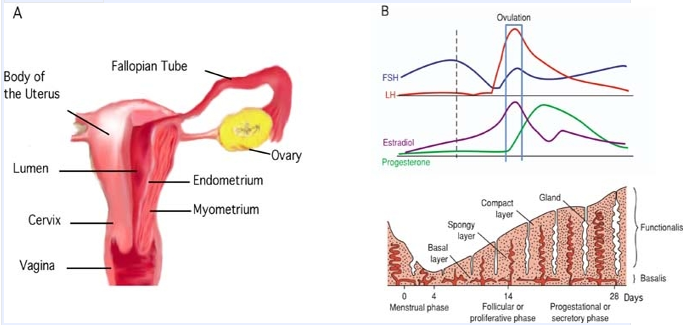
The mucosal layer of the uterus that gets sloughed off if the ovum does not get fertilized is called __________.
A. Cervix
B. Endometrium
C. Myometrium
D. Fundus
Correct Answer
B
Option A is incorrect; the cervix is the distal narrow part of the uterus with a narrow opening into the vagina. Therefore, the cervix does not shed off during the menstrual cycle.
Option B is correct; the endometrium is the innermost mucosal layer of the uterus. It is a soft, multi-layer of epithelial cells. The endometrium builds up in response to the release of estrogen and progesterone. It prepares for the implantation of an embryo. When the hormone level drops, the lining sloughed off during the menstruation phase.
Option C is incorrect; the myometrium is the middle muscular layer of the uterus. It is the smooth muscle layer present between the endometrium and the perimetrium. These muscles expand to accommodate the growing fetus, and the myometrium contractions finally expel the fetus. Therefore, it does not get sloughed off during the menstrual cycle.
Option D is incorrect; the fundus is the broad proximal part of the uterus. The fallopian tubes connect to the fundus. Therefore, it does not shed during the menstrual cycle.
Additional Info
Select all the regions of the brain that are correctly matched with their functions.
A. Cerebellum - controls body balance and equilibrium
B. Cerebrum - controls breathing, heart rate, and blood pressure
C. Thalamus -Relay station for sensory impulses passing to the sensory cortex
D. Pons -Regulates body temperature, water balance, and metabolism
Correct Answer
A, C
Option A is correct; the cerebellum, known as the little brain, coordinates skeletal muscles and maintains body posture, equilibrium, and balance.
Option B is incorrect; the cerebrum controls speech, hearing, vision, taste, and coordinates movement; it is the medulla oblongata that controls the vital signs, including breathing, heart rate, swallowing reflex, and blood pressure, and not the cerebrum.
Option C is correct; the thalamus, situated in the middle of the brain, acts as a relay center for sensory impulses.
Option D is incorrect; Pons regulates breathing and sleep; the hypothalamus controls the body temperature and metabolism.
A scientist studies the effect of fertilizer on plants and sets up an experiment. Plant A gets no fertilizer; Plant B gets 5mg fertilizer; Plant C gets 10mg fertilizer, and Plant D gets 15 mg fertilizer. All plants get the same amount of water and sunlight. For the next three weeks, he measures the growth of the plants daily. Identify the dependent variable in this experiment.
A. Amount of fertilizer
B. Amount of water
C. Growth of the plant
D. Times of measurement
Correct Answer
C
Option A is incorrect; the amount of fertilizer is the variable that is changed to determine if it impacts the plant's growth. The fertilizer is the factor that is tested. Thus it is the independent variable and not the dependent variable.
Option B is incorrect; all the plants receive the same amount of water. Thus water does not depend on any factor in the experiment. It is a constant.
Option C is correct; the plant's growth might differ based on how much fertilizer it receives. Thus, the growth depends on the fertilizer, as all other factors, like water and sunshine, are kept the same.
Option D is incorrect; the times of measurement for all the plants are kept constant ( daily for the next three weeks), so it is not the dependent variable.
Which is true of the nucleolus?
A. It is located just outside the nucleus
B. It produces ribosomes
C. It contains all of the cell’s DNA
D. All of the above
Correct Answer
b
Answer a is incorrect because the nucleolus is actually located inside the nucleus.
Answer b is correct because the nucleolus is the site of ribosome production.
Answer c is incorrect because the vast majority of DNA is found within the nucleus, not the nucleolus.
Answer d is incorrect because only answer b is true.
Learning Objective
Key Concept: Cell components and functions
Additional Info
The nucleolus was originally discovered as a little dark spot within the nucleus on electron microscopy. Scientists didn’t know what was happening in that small section of the nucleus. Over time, they learned that ribosomal RNA (rRNA) and various proteins were used to build ribosomes. The ribosomes are then shipped out of the nucleus and are either bound to the rough ER or found free-floating in the cytoplasm. It is not a topic that is asked about much on a standardized test like the TEAS; however, you should understand that it is:
*located inside of the nucleus
*is the site that ribosomes are made
Carbohydrates can be broken down from their polymer form into their monomers through a process known as:
A. Dehydration synthesis
B. Fermentation
C. Hydrolysis
D. Condensation reaction
Correct Answer
C
Option A is incorrect. Dehydration synthesis is a chemical reaction in which water is removed in order to link two monomers (such as two glucose molecules) together. It is the reverse reaction of hydrolysis.
Option B is incorrect. Fermentation is the breakdown of pyruvate, which is a 2-carbon sugar. Fermentation does not act on large carbohydrate polymers such as glycogen or starch.
Option C is correct. Hydrolysis of polymer carbohydrates such as starch breaks them down into their monomer form by adding water to the molecule. Enzymes are also required for these processes.
Option D is incorrect. A condensation reaction is another term for dehydration synthesis.
The respiratory membrane forms the air-blood barrier. This membrane is formed by the fusion of which two membranes? Select all that apply.
A. Alveolar membrane
B. Systemic capillaries
C. Pulmonary capillaries
D. Pleural membranes
Correct Answer
A, C
Option A is correct. Alveoli is the site of gas exchange and its membrane fuses with the pulmonary capillaries to form the respiratory membrane or the air-blood barrier.
Option B is incorrect. Systemic capillaries are not present in the lungs.
Option C is correct. The respiratory membrane is found in the lungs and formed by the fusion of alveoli and the pulmonary capillaries.
Option D is incorrect. Pleural membranes surround the lungs and have no role in forming air blood barrier.
Learning Objective
Respiratory and cardiovascular system
Additional Info
Air blood barrier is found in the lungs formed by respiratory membrane. The respiratory membrane is formed by the fusion of alveoli and capillaries present in the lungs - pulmonary capillaries. This thin membrane allows the air - oxygen and carbon dioxide to freely diffuse across it, but prevents the blood from crossing over.
Hydrogen iodide is synthesized from molecular hydrogen and iodine in a reversible process. What would be the impact of decreasing the temperature if the reaction has reached chemical equilibrium?
H2 (g) + I 2 (g) ⇌ 2HI (g) + heat
A. The reaction favors the reactants, and a backward reaction is initiated.
B. The reaction favors products, and a forward reaction is initiated.
C. The reaction becomes irreversible, and hydrogen iodide decomposes.
D. The reaction stops, and reactants are recovered.
Correct Answer
B
Option A is incorrect; this is an exothermic reaction, where heat is released when the product is formed; decreasing the temperature will cause the reaction to create more hydrogen iodide.
Option B is correct; since this reaction is exothermic ( releases heat), decreasing its temperature will shift the equilibrium to the right and form more products which will increase the temperature by releasing heat; this will continue till the steady state is met.
Option C is incorrect; the formation of hydrogen iodide is a reversible reaction; when molecular hydrogen, iodine, and hydrogen iodide are in a steady state, decreasing the temperature will shift the equilibrium and not make it irreversible.
Option D is incorrect; Any change to the equilibrium causes a change to the reaction rate to bring it back to the steady state; it will not stop the reaction.
Learning Objective
Explain Le Chalelier and chemical equilibrium
Additional Info
When a reaction is at equilibrium, the reactants and products form constantly. However, lowering the temperature causes the equilibrium to shift toward the product (right), and more hydrogen iodide forms until it reaches a steady state. Conversely, increasing the temperature will shift the equilibrium to the left, and hydrogen iodide will decompose to form products.
The term central nervous system refers to which of these?
A. Autonomic and somatic nerves
B. Brain, spinal cord, and cranial nerves
C. Brain and cranial nerves
D. Brain and spinal cord
Correct Answer
D
Option A is incorrect; the autonomic and somatic nerves are part of the peripheral nervous system.
Option B is incorrect; the cranial nerves are not part of the central nervous system.
Option C is incorrect; cranial nerves are part of the peripheral nervous system.
Option D is correct; the brain and spinal cord are central to the nervous system.
Learning Objective
Distinguish between CNS and PNS
Additional Info
A nerve signal from any part of the body is carried to the spinal cord or the brain, where the response is generated; that is why the brain and spinal cord together are called the central nervous system. All the other nerves arise from the spinal cord and brain and connect the body, so they are classified as “peripheral.” The central nervous system (CNS) controls all the nervous functions of the body.
Graphite is the main component of pencil lead. Graphite is a form of carbon with an atomic number of 6 and an atomic mass of 12. Approximately how many atoms of carbon are there in 2 gms of graphite?
A. 1.00 X 10^23
B. 2.00 X 10^23
C. 6.023 X 10^23
D. 12.046 X 10^23
Correct Answer
A
The number of moles of a chemical component is a way to measure the quantity of that component in a sample. It is calculated as:
Mole = (Mass of the component)/(Molar Mass of the component).
The mass of the component is the amount of chemical component you have and is expressed in grams ( the weight measured using a weighing scale). Molar Mass is one mole of the chemical component and is usually expressed in grams per mole (g/mol). It is calculated by adding up the atomic masses of all the atoms in the chemical formula of the component. Thus, in this case:
1 Mole of Carbon = 2g / 12 g/mol = 0.16 molWe also know the relationship between 1 mol of the compound and the number of atoms or molecules that makes it up, and it is expressed as follows:
Number of molecules = Mole X 6.023 X10²³
Where 6.023X10²³ is known as Avogadro’s constant. Therefore,
2 gms of C = 0.16 mol X 6.023 X 1023 = 1.00 X 10²³ number of atoms
The standard metric unit of length is:
A. Meter
B. Centimeter
C. Foot
D. Liter
Correct Answer
A
Option A is correct. The SI unit to measure distance or length is meters. A centimeter is one-hundredth of a meter. A foot is approximately equal to thirty centimeters; it is used to measure height but is not considered a standard unit of measurement the world over. Liters is the standard unit to measure liquids, as liquids are not measured in “length” this is not the correct answer choice either.
Which types of muscle tissue are multinucleated, striated, and unbranched?
A. Cardiac
B. Involuntary
C. Skeletal
D. Smooth
Correct Answer
C
Option A is incorrect; the cardiac muscles appear multinucleated and striated but are branched.
Option B is incorrect; the involuntary muscles are the cardiac and the smooth muscles.
Option C is correct; the skeletal muscle tissue is multinucleate, with the nucleus pushed to the periphery of the cylindrical cells; they have striations and are unbranched.
Option D is incorrect; the smooth muscles are uninucleated and do not have striations, which is why they are called smooth.
Learning Objective
Structure of muscle system and three types of muscles
Additional Info
The anatomy of the skeletal muscle tissue is distinct from the cardiac and smooth muscles. The cells are cylindrical and long, stacked together in long bundles. There are 2-3 nuclei in each muscle fiber (a muscle cell is called fiber) pushed to the cell's periphery. The typical striation is caused due to the light and dark bands formed by the arrangement of the actin and myosin proteins.
If you need to measure the mass of a worm, you will use a _________.
A. Balance beam
B. Ruler
C. Tape measure
D. Thermometer
Correct Answer
A
Option A is correct. A beam balance measures the mass of an object. It can measure and calibrate the mass between 10mg and 600 g. So, for example, it would be an appropriate tool to measure the mass of tiny insects like worms.
Options B and C are incorrect, as they measure the length or distance. Therefore, a ruler or tape measure will not be appropriate for measuring the worm's mass.
Option D is incorrect; the thermometer measures the kinetic energy in an object, often described as heat energy.
The only vital sign that can be controlled by voluntary action is:
A. Cardiac pulse rate
B. Blood pressure
C. Body temperature
D. Respiratory rate
Correct Answer
D
Option A is incorrect; cardiac pulse rate is under involuntary control
Option B is false; blood pressure is dependent on many factors, including the heart rate, peripheral vascular resistance, blood volume, and blood viscosity cannot be controlled by voluntary action
Option C is incorrect; the hypothalamus controls the body temperature.
Option D is correct; the rate of respiration can be controlled consciously by breathing exercises.
The control of metabolism, body temperature, endocrine activity, and thirst are functions associated with which region of the brain?
A. Medulla oblongata
B. Hypothalamus
C. Cerebellum
D. Cerebrum
Correct Answer
B
Option A is incorrect; the medulla oblongata controls critical visceral activities such as heart rate, blood pressure, breathing, and swallowing.
Option B is correct; the hypothalamus is responsible for maintaining internal homeostasis, including controlling body temperature, metabolism, thirst, hunger, and endocrine activities.
Option C is incorrect; the cerebellum is responsible for muscle coordination and balance of the body posture.
Option D is incorrect; the cerebrum is the most significant part of the brain and is responsible for processing information from sensory inputs, including speech, sight, taste, hearing, and decision-making.
Learning Objective
Functions of the nervous system
Additional Info
The hypothalamus is the “smart control” of the body - regulating the body temperature, water, and food intake ( hunger). It secretes hormones like dopamine and somatostatin, which directly controls the production of other hormones. Hormone precursors released by the hypothalamus directly regulate the function of the pituitary, thyroid, and sex organs. Hypothalamus is believed to be the main link between the endocrine and nervous systems. Thus hypothalamus helps maintain the internal homeostasis of the body.
Describe the distinguishing features of the mitotic cell division. [ Select all that apply]
A. Mitosis happens in zygotes and grows and develops into an embryo.
B. Mitosis is tightly regulated and is preceded by the growth II phase of the cell cycle.
C. Mitosis produces four daughter cells.
D. Mitosis is immediately followed by the growth I phase.
E. Mitosis involves the crossing over and recombination of DNA.
Correct Answer
A, B
Options A and B are correct; Mitosis is the most common form of cell division. It happens right after the zygote is formed and is the reason for the growth and development of the zygote into an embryo. All embryonic cell divisions are mitotic divisions. Moreover, it is tightly regulated during the cell cycle. The cell must pass various checkpoints before successfully entering the mitotic stage. The growth II phase ensures that the cell is prepared to undergo mitosis and cell division. It produces the needed enzymes, organelles, and cytoplasmic content before the nuclear content divides. Mitosis follows the Growth II phase of the cell cycle.
Option C is incorrect; mitosis results in two daughter cells which are identical to the parent cell. Meiosis produces four daughter cells.
Option D is incorrect; mitosis is followed by cytokinesis in most instances. Many cells undergo a G0 phase, where the cells are arrested from further cell division. Only if the cells pass this stage does it enter the growth I phase or G1 phase.
Option E is incorrect; mitosis does not involve the recombination of DNA. In fact, the chromosomes are identical in the two daughter cells. Crossing over happens during the prophase I stage of meiosis, where the sister chromatids of homologous chromosomes exchange DNA fragments, which results in a variation of genetic materials in the daughter cells.
Put the steps of DNA replication in order.
RNA polymerase puts down an RNA primer.
RNA nucleotides are replaced with DNA nucleotides.
DNA ligase seals together adjacent sequences of nucleotides where RNA primers were replaced.
DNA polymerase adds nucleotides in the 5’ to 3’ direction.
Helicase separates the DNA strands.
Correct Answer
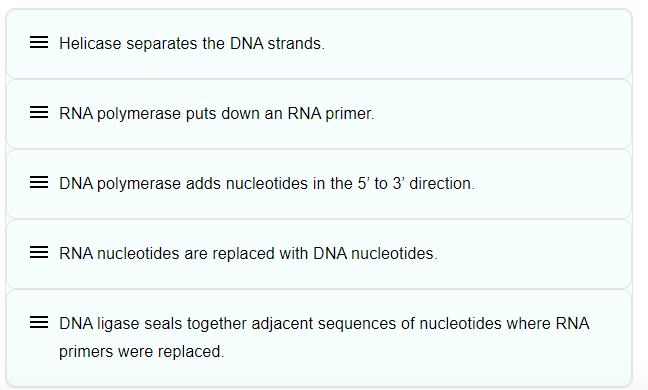
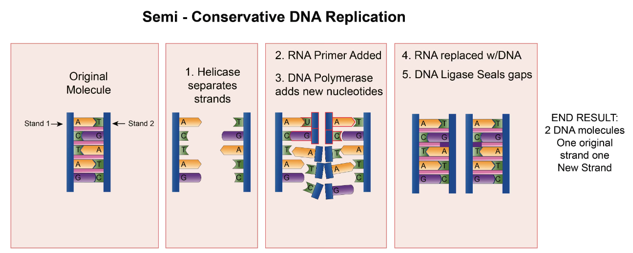
DNA replication can begin when the enzyme helicase breaks the hydrogen bonds holding the double strands together. It then moves along the molecule, popping apart the two strands. Behind it, RNA polymerase now is able to put down an RNA primer. Once that is there, DNA polymerase can start from the primer, and link together the complementary base pairs to build a new double-stranded molecule. Another DNA polymerase comes along and replaces all those RNA nucleotides with DNA. Last DNA ligase seals together the remaining gaps between sections of new nucleotides.
Which is true of Okasaki fragments? Select all that apply.
A. They are synthesized on the lagging strand.
B. They are synthesized on the leading strand.
C. They are synthesized in the 5’ to 3’ direction.
D. They are short fragments of DNA.
Correct Answer
A, C, D
Option A is correct. The lagging strand of DNA replication is found on the side of the origin of replication where DNA polymerase can’t just add nucleotides in the 5’ to 3’ direction. On that side, multiple RNA primers have to be set down, and then DNA polymerase can add small pieces of DNA between the primers.
Option B is incorrect. The leading strand of DNA replication is to the side of the origin of replication where nucleotides can easily be added in the 5’ to 3’ direction, starting from just one RNA primer. This side will not have the little chunks of DNA that we call Okasaki fragments.
Option C is correct. All DNA must be replicated in the 5’ to 3’ direction. The necessary covalent bonds just can’t chemically be attached in the other direction. The problem, then, is that only one side of the origin of replication can extend away from the initial RNA primer and follow the unwinding DNA strands to keep going all the way to the end of the DNA molecule. The other side of the origin replication will need multiple RNA primers placed between the initial RNA primer and the replication fork that is moving toward the end of the DNA molecule. Once the primers are placed, DNA polymerase can add small chunks of DNA connecting the primers while moving in the 5’ to 3’ direction.
Option D is correct. Okasaki fragments are formed because the lagging strand required that would otherwise need DNA put down 3’ to 5’. Since that can’t happen, multiple RNA primers are placed down, and then DNA polymerase comes along and adds short chunks of DNA in the 5’ to 3’ direction. These fragments are laid down moving away from the nearest replication fork; compare this with the leading strand, in which DNA polymerase starts at the RNA primer and continuously follows the opening replication fork to the end of the DNA molecule.
Additional Info

Okasaki fragments are named after two of the scientists that first established that DNA can only be synthesized in the 5’ to 3’ direction, because they were unable to find an enzyme that can replicate DNA in the other direction.
DNA helicase opens up the DNA in a replication bubble. RNA polymerase is able to add RNA nucleotides without needing them connected to neighboring nucleotides, so it is able to “prime” the strand for DNA additions. DNA polymerase adds nucleotides to the end of the primer and keeps going, following the replication fork. But on the other side of the origin of replication, this wouldn’t work. Instead, multiple RNA primers are put down near the replication fork and approaching the initial central RNA primer. Then DNA polymerase adds little chunks of DNA, and it is actually moving away from the replication fork. But overall it is working backward. This takes a little longer, hence it’s called the “lagging strand” because it won’t finish replicating quite as fast as the leading strand.
This structure present in the nose helps increase the surface area to rapidly humidify and warm the air before it reaches the inner respiratory tract. This structure is called the nasal ________.
Correct Answer
conchae
Present in the lateral walls of the nasal cavity, the three conchae serve to increase the surface area of the nasal cavity to humidify and warm the air.
Learning Objective
The functions of respiratory organs
Additional Info
The nasal conchae are a set of three infoldings present in the nasal cavity. Their function is to increase the surface area of the nasal cavity to warm the air. They also help drain the sinuses and house the olfactory receptors - the sense of smell.
Select all that apply to a myofibril.
A. It is a specialized organelle of muscle cells.
B. It is made up of discrete contractile units called a sarcomere.
C. It is a bundle of muscle fibers wrapped in a perimysium.
D. It is a single muscle cell.
Correct Answer
A, B
Options A and B are correct; a myofibril is a specialized organelle made up of protein filaments ( myofilaments) arranged as elongated tubes across the muscle fiber length. Each myofibril is made up of many sarcomeres. They form the distinctive striation patterns associated with skeletal and cardiac muscles.
Option C is incorrect; the bundle of muscle fibers is called a fascicle. Myofibril is an organelle, whereas the fascicle is a group of cells far larger than the myofibril.
Option D is incorrect; a single muscle cell is called a muscle fiber. Myofibril is found inside a muscle fiber.
Learning Objective
Structure of muscular system and three types of muscle tissue
Additional Info

From a monohybrid cross of the F1 generation, what percentage of the F2 generation will express the dominant trait?
A. 0%
B. 25%
C. 50%
D. 75%
E. 100%
Correct Answer
D, 75%
In a monohybrid cross, both parents can pass either a dominant allele or a recessive allele to the offspring. So, if the parents are both Tt, then the probability of the offspring’s genotypes are:
25% homozygous dominant genotype (TT), which expresses the dominant trait phenotypically
50% heterozygous genotype (Tt, which ALSO expresses the dominant trait phenotypically. This means that 75% of the offspring will express the dominant phenotype.
25% homozygous recessive genotype (tt), which expresses the recessive trait phenotypically.
Which of the following statements is true regarding atomic structure?
A. Only protons have mass.
B. Electrons have negligible mass.
C. Isotopes are atoms with varying numbers of protons.
D. Neutrons are predicted to be found in the electron cloud.
Correct Answer
B
Option A is incorrect. Protons and neutrons each have a mass of one atomic mass unit (amu).
Option B is correct. Electrons have such a tiny mass (negligible) that it is not counted when reporting atomic mass.
Option C is incorrect. Isotopes are atoms with the SAME number of protons, and varying number of neutrons.
Option D is incorrect. Neutrons are located in the nucleus of the atom. Protons are also located in the nucleus. Electrons are found in the “electron cloud” surrounding the atom’s nucleus.
Select all the statement that best describes the function of tropic hormones.
A. Tropic hormones stimulate the reproductive system during puberty.
B. Tropic hormones stimulate the immune response to mount a defense against pathogens.
C. Tropic hormones stimulate other endocrine glands to secrete hormones.
D. Tropic hormones stimulate nervous tissue to produce neurotransmitters.
E. Tropic hormones develop producers, consumers, and decomposers in the ecosystem.
Correct Answer
A and C
Tropic hormones do not directly trigger target cells. Instead, they stimulate other endocrine glands to start secreting hormones. Hypothalamus is the main master control of the endocrine system, producing most of the tropic hormones that trigger other endocrine glands to secrete hormones. Hypothalamus secretes follicle-stimulating and luteinizing hormones that stimulate the reproductive organs to start producing testosterone or estrogen.
Options B and D are incorrect; hormones are slow acting and have no role to play in the immune response. Similarly, they do not have any role in the functioning of nerves, especially in producing neurotransmitters, which are signaling molecules that help communicate messages throughout the body. Typically, the immune and nervous systems deal with immediate time-sensitive body responses. As a result, they are fast acting. All hormones are slow acting.
Option E is incorrect; tropic hormones are a special class of hormones that act on other hormone-producing glands. Trophic levels are a different ecological concept that divides communities into groups based on their ecological roles. It has nothing to do with tropic hormones.
Regulation of blood glucose level by insulin and glucagon is an example of _______ feedback.
Correct Answer
negative
The body maintains and monitors the blood glucose level within a narrow range. Any change in the level of the blood sugar causes the pancreas to release hormones to act in a manner that will bring it back to the steady state. Insulin is made when the blood sugar rises, it causes the cells to uptake sugar easily from the blood. Glucagon is made when the blood sugar drops, it causes the liver to breakdown glycogen and release more sugar in the blood stream. Thus insulin and glucagon work antagonistically to maintain the sugar levels in the blood. This is a classic example of the negative feedback to maintain a set standard.
From a monohybrid cross of the F1 generation, what percentage of the F2 generation will possess the recessive genotype?
A. 0%
B. 25%
C. 50%
D. 75%
E. 100%
Correct Answer
In a monohybrid cross, both parents can pass either a dominant allele or a recessive allele to the offspring. So, if the parents are both Tt, then the probability of the offspring’s genotypes are:
25% homozygous dominant genotype (TT), which expresses the dominant trait phenotypically
50% heterozygous genotype (Tt, which ALSO expresses the dominant trait phenotypically. This means that 75% of the offspring will express the dominant phenotype.
25% homozygous recessive genotype (tt), which expresses the recessive trait phenotypically.
