TEAS 7 Science Practice 2 Quiz
Practice 2
-
The male and female gonad is another name for _______ and ______.
A. Sperm and ova
B. Male gamete and female gamete
C. Penis and vulva
D. Testes and ovaries
Correct Answer
D
Option A is incorrect; sperm and ova are the haploid cells; they are not the gonads.
Option B is incorrect; the male and female gametes are the general term for haploid sex cells.
Option C is incorrect; the penis and vulva are the copulatory organs of the human reproductive system.
Option D is correct; the testes and ovaries are known as the gonads as they produce sex cells.
Select all that is true about the cranial nerves.
A. The cranial nerves originate in the cauda equina.
B. They are part of the peripheral nervous system.
C. There are twelve pairs of cranial nerves.
D. They are responsible for sense perception and movement.
Correct Answer
B, C, D
Option A is incorrect; cranial nerves arise from the brain; they are superior to the cauda equina.
Option B is correct; the cranial and spinal nerves form the peripheral nervous system.
Option C is correct; the twelve cranial nerves extend through the face, head, and neck region.
Option D is correct; the cranial nerves help carry the sensory impulses from the eyes, nose, mouth, ears, and face to the brain. They also coordinate motor movements of the face, head, and neck region, enabling speech expression and emotions.

In the reaction shown below, identify the products.
Methane (g) + Oxygen(g) → Carbon di Oxide(g) + Water(g)
A. Carbon di oxide
B. Methane
C. Oxygen
D. Water
Correct Answer
A, D
A combustion reaction is a reaction that releases heat (exothermic) and always has oxygen as a reactant. The other reactant is usually a hydrocarbon, methane, in this case. As a result, the product always yields carbon dioxide and water. Reactants are chemicals that interact, and in a chemical reaction, they are written on the left of the arrow. Products are chemicals made or formed in the reaction, written to the right of the arrow.
The two primary functions of neurons include:
A. Lubricate and secrete
B. Contraction and movements
C. Irritability and conductivity
D. Connect and protect
Correct Answer
C
Option A is incorrect; lubricating and secreting are epithelial cells' functions.
Option B is incorrect; the muscle fibers contract and move in response to a stimulus.
Option C is correct; the neurons are sensitive to the environment, and any change causes the balance of ions around them to be disturbed. This irritability is conducted as a stimulus to the neighboring cell.
Option D is incorrect; the connective tissue cells are responsible for connecting and protecting.
Which of the following set of three units are metric measurements of volume?
A. Pint, quart, gallon
B. Ounce, pound, tonnes
C. Cubic centimeter, cubic meter, liter
D. Miligram, gram, kilogram
Correct Answer
C
Options A and B are incorrect because they measure in imperial units ( not metric units) more prevalent in the US for measuring everyday household items. Pint, quart, and gallons measures fluids, whereas ounce, pound, and ton measure solids.
Option C is the correct choice. Metric units are measured on a scale of 10’s, and it is also the standard unit of measurement that scientists use the world over. A cubic centimeter measures small quantities, whereas a cubic meter and liters measure the volume of larger quantities.
Option D is incorrect. Grams are generally used to measure the mass of an object and not its volume.
Which of the following states of matter has the least molecular motion?
A. solid
B. liquid
C. gas
D. plasma
Correct Answer
Correct Answer: A, solid. The particles within a solid have lower energy than the particles within a gas. Because they have lower energy, they move around less.
A food web is shown in the diagram. Which of the following events will have the most destabilizing impact on the food web?

Source : https://commons.wikimedia.org/wiki/File:Food_web_diagram.svg
A. A decrease in the population of secondary consumers like frogs and mouse.
B. A decrease in the population of top predators like eagles and dolphins.
C. An increase in the population of primary consumers like insects and worms.
D. An increase in the population of decomposers like earthworms and soil bacteria.
Correct Answer
A
Option A is correct; a decrease in secondary consumers have the most destabilizing impact on the food web. On the one hand, it causes an increase in primary consumer population that will stress the producers, and on the other, it will destabilize the top predators that depend on the availability of secondary consumers for their sustenance.
Option B is incorrect; A decrease in the population of top predators will have some impact on the food web. Initially the population of secondary consumers which will rise. Since there are many more varieties and numbers of primary consumers there numbers will initially decrease which will eventually cause the number of the secondary consumers to reduce.
Option C is incorrect; An increase in primary consumers will have some impact on the food web. It will result in decrease in the number of producers initially but as food source deplete the population of primary consumers will eventually decrease.
Option D is incorrect; An increase in decomposers will have the least impact on the food web as they depend on the dead and decaying organic matter.
Which of the following statements supports the theory of evolution by natural selection?
A. Squirrels with mottled gray coats that blend in survive and reproduce more than squirrels that have light fur.
B. The fastest squirrels are caught by coyotes more than the slowest squirrels, which allows more slow squirrels to breed and have offspring.
C. Sharks that are the least likely to pursue prey are the most likely to survive to produce offspring.
D. Animals with the lowest motivation to breed are likely to produce the most offspring.
Correct Answer
A
Option A is correct; Squirrels that are able to avoid predation may live longer and produce more offspring.
Option B is incorrect; According to natural selection, the organisms able to avoid predation will be more successful and survive to pass on their genes to their offspring.
Option C is incorrect; According to natural selection, organisms that are the most successful predators will be more likely to survive to pass on their genes.
Option D is incorrect; According to natural selection, organisms that are not eager to breed will be less likely to pass on their genes to their offspring.
Select all that is true about the oxygenated blood flow through the heart
A. The oxygenated blood exits from the heart through the aorta
B. The oxygenated blood exits from the heart through the vena cava
C. The oxygenated blood enters the heart through the pulmonary vein
D. The oxygenated blood enters the heart through the pulmonary artery
Correct Answer
Correct Answer: A, C
Option A is correct; the aorta is the main artery that transports oxygenated blood away from the heart.
Option B is incorrect; the vena cava (superior and inferior) are the largest veins that bring deoxygenated blood to the heart.
Option C is correct; the pulmonary vein transports oxygen-rich blood from the lungs to the heart.
Option D is incorrect; the pulmonary artery transports oxygen-poor blood from the heart to the lungs.

Which type of genetic mutation involves the insertion or deletion of a nucleotide, changing how the codons are read?
A. Frameshift mutation
B. Missense mutation
C. Nonsense Mutation
D. Silent mutation
Correct Answer
A
Option A is correct; frameshift mutations occur when nucleotides are either inserted or deleted from the DNA sequence, causing a shift in the reading frame during translation. This leads to a completely different amino acid sequence downstream from the mutation site, often resulting in a nonfunctional protein.
Option B is incorrect; this involves the substitution of one amino acid for another, but it does not necessarily cause a shift in the reading frame.
Option C is incorrect; this mutation leads to the premature termination of protein synthesis, but it is not directly related to frameshifts.
Option D is incorrect; this type of mutation does not alter the amino acid sequence and is unrelated to frameshifts.
Muscle cells require __________ energy in order to contract:
A. Myosin
B. Calcium
C. ATP
D. Glucose
Correct Answer
C
Option A is incorrect because myosin is a protein found in the muscle fiber that binds with the ATP and pulls on the thin filament, which causes contraction. It is not an energy provider.
Option B is incorrect. Calcium ion is needed to make the active site available for the myosin to bind with the thin filament. It does not provide energy.
Option C is correct. Adenosine triphosphate, or ATP, is a cellular energy molecule that can provide high energy in the form of a phosphate molecule. This brings about a conformational change to reacting molecules resulting in a chemical change.
Option D is incorrect. Glucose is a simple sugar that stores chemical energy in its covalent bonds. It is broken down to recharge spent ADP back to ATP by cellular respiration.
Which is true of DNA polymerase? Select all that apply.
A. It is an enzyme.
B. It can only add nucleotides by connecting them to an adjacent nucleotide.
C. Its role is to separate the DNA strands and prime the origin of replication.
D. It can only add nucleotides in the 5’ to 3’ direction.
Correct Answer
Correct Answers: A, B, D
Option A is correct. DNA polymerase is an enzyme that connects chains of nucleotides together. It is able to recognize which nucleotide is necessary (for base pairing), and then it is able to covalently link the phosphate sugar of one nucleotide with the next nucleotide.
Option B is correct. Interestingly, it cannot start connecting nucleotides together without one first being in place. Therefore, it relies on the existence of an RNA primer, which is a short sequence of RNA nucleotides. This makes RNA polymerase required for DNA replication!
Option C is incorrect. No, DNA polymerase doesn’t separate the strands. That is the role of the enzyme called helicase. RNA polymerase is the enzyme that puts down the first primers at the origin of replication.
Option D is correct. Like all nucleotide polymerases, DNA polymerase can only put down nucleotides in the 5’ to 3’ direction.
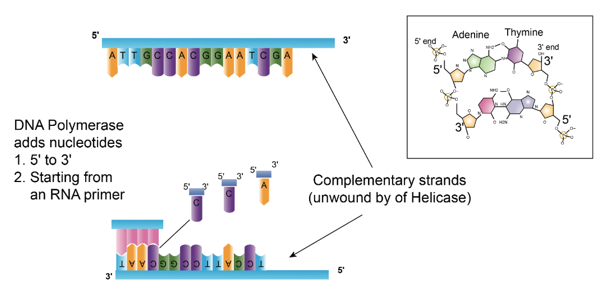
DNA polymerase is one of many enzymes involved in DNA replication. Indeed, there are a number of DNA polymerase types. They each have slightly different abilities and specialties, from speed to editing to proofreading. But all DNA polymerases need a starting place for linking nucleotides together - which requires them to start from an RNA primer. And all DNA polymerases can only add the new nucleotide to the end of the nucleotide with a hydroxyl group; hence they always add new nucleotides in the 5’ to 3’ direction (the number 5’ and 3’ refer to specific carbons on the deoxyribose sugar of the nucleotide).
Which is true of the cytoskeleton? Select all that apply.
A. It may have thin or thick filaments.
B. Actin and myosin are cytoskeletal elements
C. Molecular motors such as myosin and kinesin attach and move along cytoskeletal elements such as actin and microtubules.
D. Its only role is in muscle contraction
Correct Answer
a, b, c
Answer a is correct because the cytoskeleton has thin and thick filaments. Generally, we call actin the thin filament and myosin the thick filament.
Answer b is correct because actin and myosin are cytoskeletal elements; students will be most familiar with their role in muscle contraction but they serve a variety of other roles the cell too.
Answer c is correct because myosin and kinesin are molecular motors that attach and move along other cytoskeletal elements. Myosin moves on actin and kinesin moves on microtubules. These little motors rely on ATP for their energy.
Answer d is incorrect because cytoskeletal elements play many different roles within cells, not just muscle contraction! The spindle fiber that moves chromosomes during cell division is probably the other best known role that students need to know.
Additional Info
The cytoskeleton includes protein fibers and protein motors. Myosin moves on actin, and kinesin and dynein are the motors that move on microtubules.
Four important roles of the cytoskeleton:
- Myosin pulling on actin is the classic “cross-bridge” theory of the sliding filament model of muscle contraction.
- Kinesin and dynein pulling on microtubules and working together to position the chromosomes and then separate them during cell division is the other well-known cytoskeletal activity
- Vesicles and other cargo can be transported from one part of the cell to another, usually by kinesin or dynein on microtubules.
- Myosin can pull on actin to reinforce and shape cells; for example dendrites and axons or microvilli in the small intestine
- Myosin can walk along actin to move other signaling proteins to other places in the cell as part of cell communication and control of activities
In the anatomical position, the body is erect, and feet are parallel and shoulder length apart with arms relaxed at the side and hands _________.
A. Fisted at the side.
B. Open, the palm is facing backward.
C. Open, the palm is facing forward.
D. Open, the palm is flat facing the thigh.
Correct Answer
Correct Answer: C
Option A is incorrect; in the anatomical position, the hands are open.
Option B is incorrect; in the anatomical position, the hands are open and not facing backward.
Option C is correct; in the anatomical position, the hands are open, and the palms are facing forward.
Option D is incorrect; in the anatomical position, the hands are not facing the thighs.
Anatomical position is the reference used to describe human anatomy. Although the body is erect in this position, facing forward with feet shoulder length apart, the only part to remember is the position of hands - with the palm open and facing forward.

Which organ produces oxytocin and antidiuretic hormone (ADH)?
A. Ovaries
B. Adrenal Glands
C. Hypothalamus
D. Uterus
Correct Answer
C
Option A is incorrect; the ovaries produce two endocrine hormones that regulate the menstrual cycle - estrogen and progesterone. They do not secrete oxytocin or ADH.
Option B is incorrect; the adrenal glands also secrete hormones like adrenaline and cortisol that regulate the body’s stress response. However, they do not secrete oxytocin and ADH.
Option C is correct; the hypothalamus secretes oxytocin in females and ADH in males and females. Oxytocin is secreted mainly during labor and after childbirth to induce contraction of the uterus and mammary glands. The antidiuretic hormone regulates the electrolyte and water levels in the body. It acts on the kidney and impacts blood filtration and water reabsorption into the bloodstream.
Option D is incorrect; the uterus does not secrete oxytocin but is the effector organ that responds to the hormone, especially during childbirth. The uterus is not an organ that secretes hormones and is not considered part of the endocrine system.
The blood flow, rich in oxygen from the lungs to the heart, is called _______ circulation.
Correct Answer
Pulmonary
Pulmonary circulation is the transport of blood between the heart and lungs. The oxygen-poor blood that flows into the lungs carrying carbon dioxide is called deoxygenated blood. In the lungs, the blood exchanges carbon dioxide for oxygen across the alveolar membrane and capillaries while picking up oxygen. The return of the oxygen-rich blood (oxygenated) from the lungs to the heart completes pulmonary circulation.
What is the concept of a mole in chemistry?
A. The amount of substance that contains as many particles as there are atoms in exactly 12 grams of carbon-12.
B. The amount of substance that contains as many particles as there are atoms in exactly 1 gram of carbon-12.
C. The amount of substance that contains as many particles as there are molecules in exactly 1 gram of water.
D. The amount of substance that contains as many particles as there are molecules in exactly 12 grams of water.
Correct Answer
A
Option A is correct; Among all the elements in the periodic table and their isotopes, only Carbon-12 has the exact atomic mass of 12amu, and others have some decimal values. 12g of carbon-12 has theoretically 12 amu (6 neutrons and 6 protons).
Thus, 12 g/12 amu =1 mole of carbon.
It was also determined that 1 mole of carbon 12 has 6.023 X 10²³ particles or atoms of carbon. The mole concept helps quantify the number of molecules in a substance and convert between mass and molar mass and the number of molecules.
Option B is incorrect; 1 mole of carbon has 12g of carbon, and a mole has 6.022 X10²³ atoms of carbon. Therefore, 1 g of carbon will have 6.022 X10²³/ 12 g or 5.16667 x 10²² atoms.
Options C and D are incorrect; water is a molecule, and although it is used as a basis for many other units like specific heat, it is not considered for the mole concept.
Which of the following is a reactant in the chemical equation below?

A. H2O2B. catalase
C. H2O
D. O2
Correct Answer
A
Option A is correct; The reactants are the chemicals written on the arrow's left side. There could be one or more reactants in a chemical reaction.
Option B is incorrect; Catalase is a catalyst; the catalyst is typically written on top of the arrow. These are the substances needed for the reaction but do not get used up or consumed during the reaction.
Options C and D are incorrect; H2O and O2 are the products or components that are made by the reaction. This is what is left at the end of the reaction.
Additional Info
To identify reactants and products in a chemical reaction, you can look for the substances listed on either side of the arrow in a chemical equation. Reactants are the substances being used up, while products are the substances being formed. In a balanced chemical equation, the number of atoms of each element should be the same on both sides, helping you accurately identify the reactants and products.
Select all the infectious diseases caused by viruses.
A. Athletes foot
B. Bubonic plague
C. Chicken pox
D. Dengue fever
E. Leukemia
F. Hepatitis B
G. Tuberculosis
H. HIV/AIDS
Correct Answer
C, D, F, and H
Options C, D, F, and H are correct. They are caused due to viruses.
-Chickenpox is caused by Varicella sp and spreads from person to person by contact.
-Dengue fever is caused by the Dengue virus and spreads through mosquitos.
-A virus causes hepatitis B. Hepatitis B spreads from person to person by bodily fluids.
-HIV/AIDS is caused by the virus Human Immunodeficiency Virus, it spreads from person to person through the exchange of bodily fluids.
Option A is incorrect; a fungi cause athlete's foot.
Option B is incorrect; bacteria cause the bubonic plague. It needs a vector, usually rats, that spreads the disease.
Option E is incorrect; leukemia is a type of blood cancer caused due to metabolic irregularity. It is not an infectious disease.
Option G is incorrect; tuberculosis is caused due to bacteria. A vaccine is available to prevent it.
Select all the processes that are considered to be mechanical digestion of food.
A. Mastication
B. Deglutination
C. Segmentation
D. Glycolysis
Correct Answer
A, B, C
Option A is correct; mastication is the chewing, tearing, and grinding of food, all physical breakdown that does not involve chemically changing its nature. It is an example of mechanical digestion.
Option B is correct; deglutination is the swallowing of bolus, an example of a physical process or mechanical digestion.
Option C is correct; segmentation involves moving the digested chyme backward and forwards in small pouches throughout the intestinal tract by rhythmic contraction. This is, again, a physical process, an example of mechanical digestion.
Option D is incorrect; glycolysis refers to the breakdown of sugar by a series of enzymatic reactions. It is considered to be part of chemical digestion.
Additional Info
Mechanical digestion involves the physical breakdown of food into smaller sections. Chewing, churning, squeezing, and mixing are all examples of mechanical digestion. Mechanical digestion takes place all along the alimentary canal.
Mouth - mastication (chewing)
Pharynx - deglutination (swallowing)
Esophagus - peristalsis (wave-like movement)
Stomach-maceration (mixing waves)
Intestines - segmentation (slow wave-like movement)
The radius is ____ to the ulna in the anatomical position.
A. anterior
B. lateral
C. medial
D. superior
Correct Answer
B
Option A is incorrect; in the anatomical position, although the forearm is facing forward (anterior), the radius is not in front of the ulna but on its outer side.
Option B is correct; in the anatomical position, the forearm is facing forward, so the radius in the forearm is towards the outside or lateral to the ulna.
Option C is incorrect; in the anatomical position, the forearm is facing forward; thus ulna is medial, or towards the insides of the arm, and the radius is lateral or towards the outside of the ulna.
Option D is incorrect in the anatomical position forearm is facing forward, and the radius and ulna bones are side by side, not superior or inferior with reference to each other.
In the anatomical position, the forearm is in the supinated position. So the radius, which is a shorter bone lies to the outside of the ulna. Thus it is in the lateral forearm.
Which of the following statements is true about the role of a concentration gradient in regulating osmosis in a living cell?
A. The concentration gradient of a substance across a semipermeable membrane determines the direction of osmosis.
B. The concentration gradient of a substance across a semipermeable membrane does not affect the rate of osmosis.
C. The concentration gradient of a substance across a semipermeable membrane affects the rate of osmosis but not the direction.
D. The concentration gradient of a substance across a semipermeable membrane does not affect either the direction or the rate of osmosis.
Correct Answer
A.
Option A is correct. Osmosis is the movement of water across a semipermeable membrane from an area of high water concentration to an area of low water concentration. The concentration gradient of a substance across a semipermeable membrane determines the direction of osmosis. In other words, water will move from an area with a high concentration of water to an area with a low concentration of water.
The rate of osmosis is also affected by the concentration gradient. The greater the concentration gradient, the faster the rate of osmosis. This is because the concentration gradient provides a driving force for the movement of water.
Option B is incorrect. The rate of osmosis is also affected by the concentration gradient. The greater the concentration gradient, the faster the rate of osmosis. This is because the concentration gradient provides a driving force for water movement.
Option C is incorrect. The concentration gradient determines the direction of the movement of water. It always moves with the gradient - from high water concentration to low water concentration.
Option D is incorrect. The concentration gradient impacts both - the rate of osmosis and the direction of water movement.
The function of this structure is to protect the air passageway and block the food particles from entering the lower respiratory tract. This structure is called the _______.
Correct Answer
Epiglottis
Known as the "guardian of the airways", the epiglottis is a flap-like structure, present inferior to the pharynx. The pharynx is the common passageway for food and air. The epiglottis protects the air passageway. It shuts down when we eat, so food particles do not enter the lower respiratory tract.
Gray hair is caused due to the lack of production of _______.
A. Adipose
B. Collagen
C. Keratin
D. Melanin
Correct Answer
D
Option A is incorrect; the hypodermis is made up of adipose tissue. These are cells that store fat in the form of globules. They provide warmth to the body. They have no role in hair coloration.
Option B is incorrect; collagen is a protein produced by the skin's dermal layer. It provides structure, support, and rigidity to maintain the skin's suppleness. It is present in the hair follicle but not in the hair itself. It has no role to play in hair color or the lack of it.
Option C is incorrect; keratin is another protein produced in the epidermal layers and hair. It is colorless and translucent. It provides waterproofing to the outermost layer of the skin and hair. It prevents water from entering the body. It does not directly cause graying of hair. When hair loses its pigment, the keratin color shows up. Keratin is produced in the hair cells in great numbers giving it the structure.
Option D is correct; melanin is the protein that gives a unique color to the skin and hair. Melanin production drops when the skin loses the melanocyte cells that produce them—a lack of melanin results in the graying of hair.
Yellow seeds (YY) were crossed with green seeds (yy) in the parent generation. What will the phenotypes of the F1 generation be?
A. 100% Yy
B. 50% Yy
C. 100% yellow
D. 50% yellow
Correct Answer
Correct answer: C, 100% yellow
Option A is incorrect. 100% of the F1 generation will be Yy, but that is a genotype, and the question asks for a phenotype.
Option B is incorrect. 100% of the F1 generation will have the genotype Yy and the phenotype yellow seeds. Note also that this option provides a genotype and the question asks about phenotype.
Option C is correct. 100% of the F1 generation will have the genotype Yy and the phenotype yellow seeds.
Option D is incorrect. All of the offspring will be yellow phenotype because they will all have Yy genotype.
Additional Info
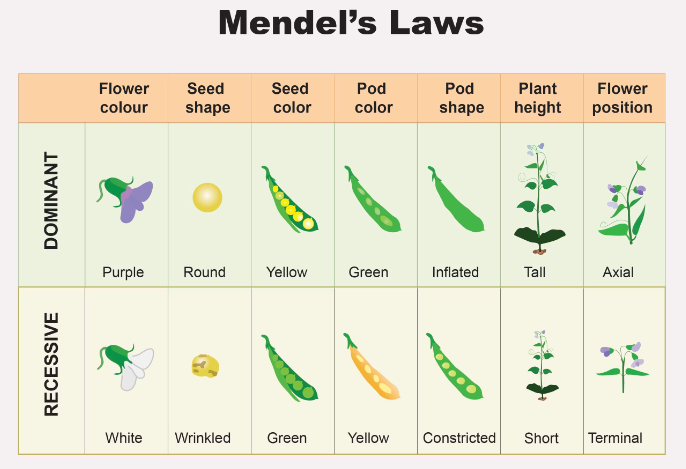
Capital letters indicate dominant traits and lowercase letters indicate recessive traits.
For the DNA template triplet sequence CAT, what would be the sequence of the anticodon on the tRNA that carries the correct amino acid?
Correct Answer
CAU
mRNA made from this DNA template would be: GUA
Therefore, the tRNA carrying an amino acid would be: CAU
Additional Info
Adenine base pairs with Uracil in RNA. Cytosine always pairs with Guanine.
The mRNA codon of GUA would code for the amino acid valine. The tRNA with the anticodon CAU would carry the valine to the ribosome where it would be linked to the developing protein.
Carpel tunnel syndrome can be found in the ________ region.
A. Elbow
B. Wrist
C. Finger
D. Heel
Correct Answer
B
Option A is incorrect. The elbow area is known as the antecubital, the nerve syndrome associated with the elbow is called cubital tunnel syndrome and not carpel tunnel.
Option B is correct. The wrist is made up of the carpel bone, this area is known as the carpel, and the pain in the wrist area is called carpel tunnel syndrome.
Option C is incorrect. Fingers are known as digits and are not related to cubital tunnel syndrome.
Option D is incorrect. The heel is called the calcaneus and not the cubital region.
Additional Info
The carpel area is found in the wrist. It is made up of 8 short bones that articulate with the radius in the proximal end. They connect the palm to the lower arm and are responsible for the finer movement of the hand.
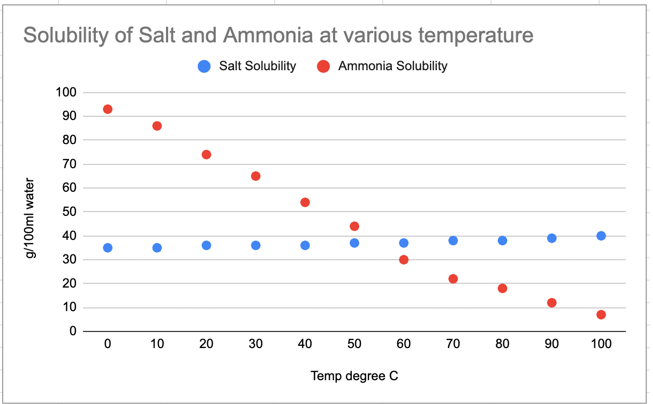
Nelly is testing the solubility of salt and ammonia in different temperatures. Based on the graph below, what is the best possible conclusion for the solubility experiment?
A. Ammonia is more soluble in high temperatures.
B. Salt is more soluble than ammonia at room temperature.
C. Temperature does not affect the solubility of salt.
D. Temperature influences the rate of solubility.
Correct Answer
D
The graph shows that temperature influences the solubility of different chemicals differently. The solubility of ammonia decreases with an increase in temperature, whereas the solubility of salt has a slight increase with the increase in temperature.
Option A is incorrect; the graph shows about 92 gms of ammonia dissolves in 0℃ whereas less than ten gms of ammonia dissolves in 100℃. Therefore, ammonia is less soluble in high temperatures.
Option B is incorrect; the average room temperature is 30-40℃ the solubility of ammonia is more than that of salt.
Option C is incorrect; the solubility of salt increases from 35 g to over 40 g from 0℃ to 100℃. Therefore, there is an increase in solubility. So temperature does influence solubility.
Option D is correct; the best possible conclusion is that temperature affects the solubility of different chemicals. Ammonia solubility decreases with temperature, whereas salt solubility shows a slight increase.
Put the following muscular system structures in order from biggest to smallest.
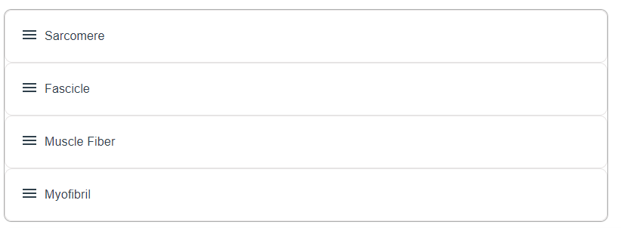
Correct Answer
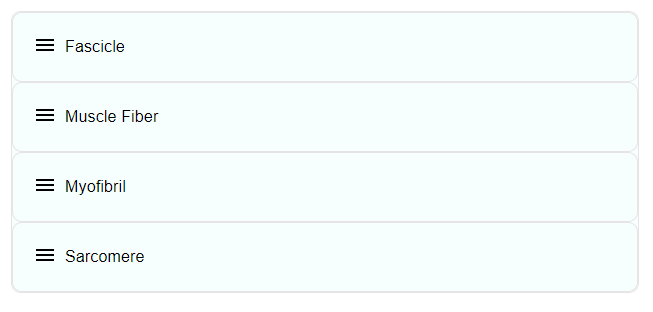
Skeletal muscles are made up of fascicles, or bundles, or muscle cells. Within one fascicle many muscle fibers. (Note: Muscle cells are usually referred to as fibers because they are long and slender.) Each muscle cell/fiber is filled with specialized organelles called myofibrils. Each myofibril is composed of repeating sarcomeres, which are the functional contractile unit of muscle.
Why are calcium ions necessary for muscle contraction?
A. They trigger the binding of myosin heads to actin.
B. They start action potential in nerves.
C. They speed up muscle contraction.
D. They breakdown acetylcholine.
Correct Answer
A
Option A is correct; calcium ions bind with proteins of the thin filament and expose the binding site on actin where myosin binds to actin.
Option B is incorrect; the accumulation of sodium ions starts the action potential to build up in a neuron, not calcium.
Option C is incorrect; the speed of muscle contraction is not directly affected by the calcium ion, although its presence is necessary for the sustained contraction of muscles.
Option D is incorrect; calcium ion does not break down acetylcholine.
Additional Info
Calcium ions are stored in the sarcoplasmic reticulum of the muscle fiber. They are released when sodium ion concentration in the sarcoplasm increases. According to the sliding filament theory of muscle contraction, the calcium ion binds to troponin, a protein that shields the active binding site of actin filaments. When the actin binding sites are exposed, the myosin latches on to the actin and pulls, causing the thick filament to shorten. This continues till the muscle is contracted. In the absence of calcium ions, the actin and myosin cannot bind as the binding site is not available, and the muscle is in a relaxed state.
Which of the following defines a genome?
A. A gene
B. One section of a molecule of DNA that codes for a particular protein product
C. All of the genetic material of an organism
D. A molecule of DNA and its associated proteins
Correct Answer
C
Option A is incorrect. A gene is a segment of DNA with a sequence that codes for the production of a protein product.
Option B is incorrect. This answer gives the definition for a gene.
Option C is correct. The genome is all of the genetic information that one organism contains. Depending on where you look, you will find slightly different definitions for this term. The essential understanding is that the “genome” refers to all of the possible products and genetic control that a particular organism has.
Option D is incorrect. This gives the definition of a chromosome.
Additional Info
The genome refers to all the possible products and controls present in the blueprint of an organism. What proteins can it make? These would be all the genes that code for proteins. How is it able to turn these proteins on or off, or to adjust the amounts of various products that are made? These would refer to all the regulatory regions of the DNA sequence. These areas used to be called junk DNA because scientists (wrongly) assumed they had no existing function. Shockingly, only a small percentage of the genome codes for proteins. But all of it is considered part of the genome.
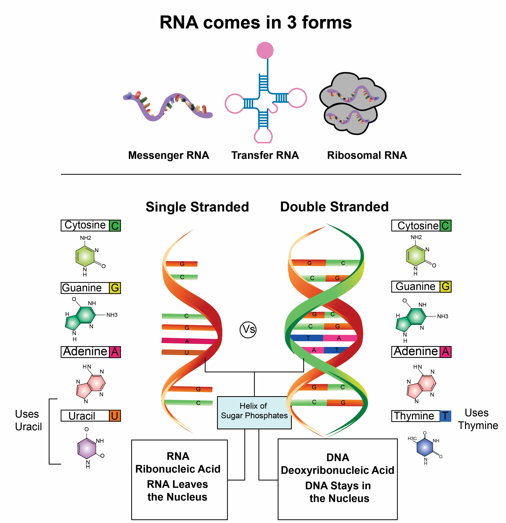
Which of the following is a difference between DNA and RNA? Select all that apply.
A. DNA is double-stranded and RNA is single-stranded.
B. DNA contains thymine and RNA does not.
C. DNA can leave the nucleus and RNA cannot.
D. DNA contains phosphate and RNA does not.
Correct Answer
Correct answer: A, B
Answer choice A is correct. DNA is double-stranded. RNA is single-stranded. In tRNA, the single strand folds back on itself and forms complementary base-pairing, but the molecule is still just one strand of RNA. In DNA, it always has two strands base-paired. The hydrogen bonds holding the two strands together can be “unzipped” whenever mRNA needs to be transcribed from a gene, or whenever the DNA needs to be replicated.
Answer choice B is correct. Thymine is a one-ring pyrimidine that base pairs with adenine in DNA double-strands. When mRNA is made from one of the DNA strands, uracil is brought in by RNA Polymerase (instead of thymine) as a base pair for adenine.
Answer choice C is incorrect. The very large, massive macromolecule DNA is way too large and too polar to leave through the nuclear pores. During mitosis or meiosis, the nuclear envelope must first be degraded so that DNA can be pulled to opposite sides of the cell. Then the nuclear envelope reforms around the DNA and it once again is stuck inside the nucleus. RNA is able to fit out through the nuclear pores - either as part of a ribosome (rRNA), transfer RNA (tRNA), or as a gene transcript (mRNA). So this option is wrong - DNA CAN’T leave the nucleus, but RNA can leave the nucleus.
Answer choice D is incorrect. All nucleic acids contain a repeating phosphate-sugar backbone. So both DNA and RNA contain phosphate.
Additional Info
Ribonucleic acid has these differences from deoxyribose nucleic acid:
*RNA is a single-strand of nucleotides; DNA is two strands of nucleotides
*RNA contains the pyrimidine uracil; DNA contains the pyrimidine thymine instead
*RNA can leave the nucleus; DNA remains in the nucleus
*RNA comes in three forms: messenger RNA (mRNA), ribosomal RNA (rRNA), and transfer RNA (tRNA)
*The pentose sugar in RNA is ribose; in DNA it’s deoxyribose
Select ALL ORGANS that are part of the cardiovascular system.
A. Heart
B. Lungs
C. Vessels
D. Blood
Correct Answer
A, C
The heart ( A) and vessels(C) are cardiovascular system organs. Lungs (B) are not part of the cardiovascular system as their function is solely related to getting oxygen into the body and removing the waste buildup of carbon dioxide. Even though blood (D) is part of the cardiovascular system, it is not an organ - it is a tissue that circulates in the vessels.
Additional Info
The cardiovascular system is involved in the transport of materials around the body. Also called the circulatory system, the major organs that belong to this system are the heart and the closed vessels - the arteries and veins. Blood is a fluid tissue that circulates in the vessels and is involved in transporting materials.
Select the functions of the upper respiratory tract that is correct.
A. Ventilation
B. Gas exchange
C. Acid-base balance
D. Anaerobic respiration
Correct Answer
A
Option A is correct. Ventilation is the process of moving air in and out of the body. The upper respiratory tract is the central conducting zone for air movement.
Option B is incorrect. Gas exchange removes carbon dioxide from the blood and replaces it with oxygen. It happens in the alveoli present in the lower respiratory tract.
Option C is incorrect. Acid-base balance or pH is maintained in the blood within a narrow range. It is done in the lung capillaries, which are part of the lower respiratory tract.
Option D is incorrect. Anaerobic respiration happens in the body cells when oxygen availability is low. This is not the function of the upper respiratory tract.
Additional Info
The upper respiratory tract consists of the nose and throat region. It is responsible for moving air in an out of the body, also known as ventilation. It protects the airways from dust and pathogens by physically trapping them in the folds of the nasal conchae. It also helps keep the air clean, warm, and moistened for easy passage to the lower regions. The nose is also the major olfactory organ that helps with detecting smell.
Skin is made of a variety of tissues. Select all the layers of the skin that are correctly matched with the type of tissue.
A. Epidermis - epithelial tissue
B. Dermal papilla - adipose tissue
C. Reticular layer - connective tissue
D. Subcutaneous layer - muscular tissue
E. Hypodermis - adipose tissue
Correct Answer
A, C, E
Options A, C, and E correctly match the tissue type. The epidermis is the superficial layer of skin made of mostly epithelial cells that form a chemical, biological, and mechanical barrier. The epithelial cells tightly adhere to each other and have keratin deposits that provide waterproofing and strength to the cells. The reticular layer is the major part of the dermis, composed of dense connective tissues rich in collagen and elastin fibers that provide the skin with suppleness and stretchability. Finally, the hypodermis, called the subcutaneous layer, is made of adipose tissue rich in fat cells.
Option B is incorrect; the dermal papilla is the thin layer of the dermis located inferior to the epidermis. This irregular, ridge-shaped layer lies inferior to the epidermis. It is mostly made of loose connective tissue and provides nutrition to hair roots and the epidermis. The dermal papilla in the fingers and toes is responsible for each individual's unique fingerprints.
Option D is incorrect; the subcutaneous layer is another name for hypodermis. It is made of adipose tissue. Although muscles lay underneath most of the subcutaneous layer, this layer is distinct from the skeletal muscle tissue as it is rich in globular fat cells. The adipose tissue provides warmth and cushions the internal vessels, nerves, and organs from mechanical stress.
The reaction between an acid and a base that produces salt and water is called a/an ____________ reaction.
Correct Answer
neutralization
A neutralization reaction produces two neutral pH products- water and salt. Thus it is called a neutralization reaction. Acids have a pH between 0-6.9, and bases have a pH ranging from 7.1 -14; the reaction between the two produces water and salt that have a pH of 7
A single contraction of a muscle is called a ______.
Correct Answer
twitch
A twitch is a single “jerky” contraction of a muscle. It is in response to a stimulus, it has a latent phase, a contraction, and a relaxation phase. When the stimulus is sustained the twitches are summated to form a sustained contraction.
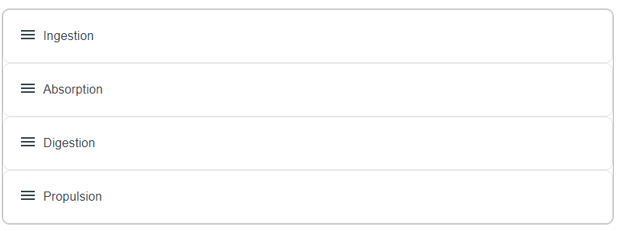
Arrange the following processes of digestion in the correct order.
Correct Answer
Correct Answer: Ingestion →Propulsion → Digestion → Absorption
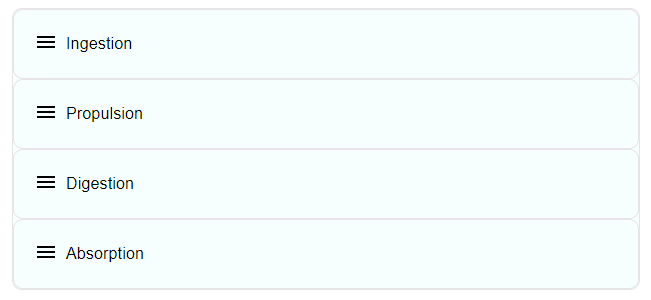
There are five main processes or steps of digestion. It starts with ingestion or taking the food inside the body; the main organs involved are the mouth, tongue, and teeth. Propulsion is next, where the chewed food mixed with saliva (bolus) is moved through the alimentary canal. It is done through regular contraction and relaxation of the smooth muscle linings of the alimentary tract and is called peristalsis. Chemical digestion happens in the stomach and intestines, where the bolus mixed with stomach acid ( chyme) is broken down into simpler molecules. The simple monomers are then absorbed into the bloodstream in the small intestine. This is known as absorption. Finally, the chyme that could not be broken down is removed as defecation.
Select all factors that influence the rate of a chemical reaction.
A. Temperature
B. Amount of products
C. Concentration of reactants
D. The chemical property of the products
E. Presence of catalyst
F. Pressure
G. pH
Correct Answer
A, C, D, E, F, and G
Options A is correct. The rate of a chemical reaction is influenced by temperature. Usually, a slight increase in temperature increases the reaction rate. This is because it provides kinetic energy to the molecules of the reactants, but a higher temperature can denature the reactants and affect the reaction adversely. Therefore, a temperature change will change the reaction rate depending on the reaction.
Option B is incorrect; the amount of product does not influence the reaction rate. The products are formed because of the reaction. The rate of reaction influences the amount of products and not the other way around.
Option C is correct; the concentration of reactants usually positively influences the reaction rate. The more the reactant, the more the chance of collision between the molecules. As a result, more products form.
Option D is incorrect; the chemical properties or chemical nature of products include - flammability, radioactivity, or stability. It does not influence the rate of reaction but would control how the reaction is set up.
Option E is correct; the catalyst, by definition, speeds up the reaction without being consumed by it. As a result, they bring down the activation energy needed for the reaction to take place and make the products form faster. Therefore, the presence of a catalyst positively affects the rate of reaction.
Option F is correct; pressure influences the reaction between liquids and/or gases. As the pressure increases, the molecules are tightly packed or closer and will generally increase the collision of molecules, thus increasing the rate of reaction.
Option G is correct; Many biological reactions are sensitive to the pH and will happen faster at a particular pH range. For example, pH measures the availability of hydrogen or hydronium ions in a solution. In addition, certain enzymes that catalyze reactions work well in a narrow pH range. Thus, pH can influence the rate of reaction.
Which of the following is an example of mechanical digestion?
A. Stomach contractions mix food into a uniform mixture.B. Pancreatic secretions break down lipids.
C. Salivary amylase digests carbohydrates.
D. Pepsin breaks peptide bonds.
Correct Answer
A
Option A is correct. The stomach has three sets of muscles: longitudinal, circular, and oblique. These muscles contract and mix the food and fluids in the stomach into a uniform mixture called chyme. This stomach “churning” is considered mechanical digestion, like chewing, because it can break down the food into smaller pieces without chemically altering its composition. Note that the fluids will also contain chemical enzymes, but the muscular stomach contractions on their own are mechanical digestion.
Option B is incorrect. Pancreatic secretions include, among other secretions, lipase, which chemically breaks down lipids into fatty acids and glycerol.
Option C is incorrect. Salivary amylase chemically breaks complex carbohydrate polymers into smaller simple sugars.
Option D is incorrect. Pepsin is secreted in the stomach and chemically breaks long protein polypeptides down into shorter strings of amino acids.
Additional Info
Mechanical digestion: Physically breaking food into smaller pieces. This increases the surface area of the food overall and allows more enzymes to act more efficiently.
Chemical digestion: Enzymatic action on the covalent bonds of the macromolecules. Amylase breaks apart the sugars of complex carbohydrates, pepsin and proteases break down the peptide bonds of amino acid chains, and lipases break fatty acids into smaller molecules.
Biting, chewing, stomach contractions, peristalsis, and segmentation are all examples of mechanical digestion. Bile secretion by the gallbladder is considered a form of mechanical digestion, too, because it breaks lipids into smaller pieces but Chemical digestion includes all of the enzymes that break down macromolecules - amylase, pepsin, other proteases, and lipase.
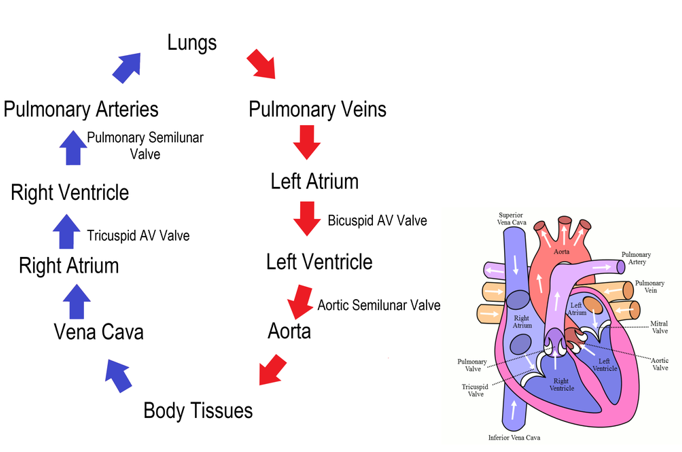
The vena cava connects to the _______ of the heart.
A. Right atrium
B. Right ventricle
C. Left atrium
D. Left ventricle
Correct Answer
Correct Answer: A
Option A is correct; the vena cava, both superior and inferior, connect to the right atrium.
Option B is incorrect; the right ventricle is connected to the pulmonary artery, which carries blood to the lungs.
Option C is incorrect; the left atrium connects to the pulmonary vein that brings blood from the lungs.
Option D is incorrect; the left ventricle connects to the aorta, which carries blood to other arteries.
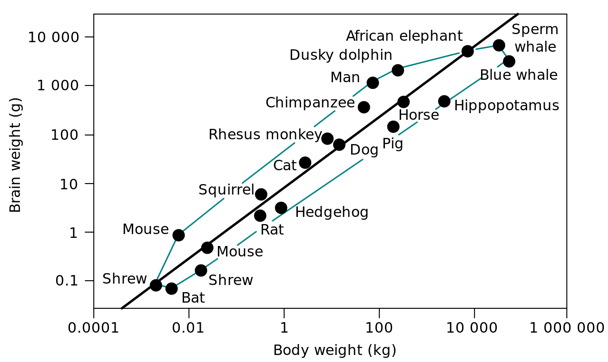
In the graph below the brain-body weight ratio is plotted for some mammals. Identify the unit of measurement used.
A. Centimeters
B. Centigrades
C. Inches
D. Grams
Correct Answer
D
The graph shows the body weight of mammals on the X-axis and the brain weight on the Y-axis. The unit of measurement for mass is grams and is denoted by the small letter "g". Centimeters and inch scales are used to plot the graph into comparable sections. Still, each data point refers to the unit measurement of the weight: kilograms for body weight and grams for brain weight.
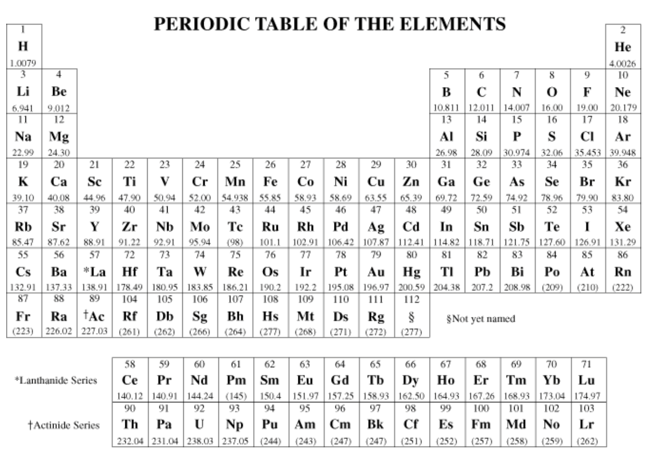
Based on the periodic table of elements, which of the following atoms have the ability to form an anion? (select all that apply)
A. H
B. He
C. Be
D. C
E. O
F. F
Correct Answer
E, F
Options A and C are incorrect. Hydrogen and Berillium have a tendency to form cations as it is easy to donate one or two valence electrons in their outermost shell. They gain a positive charge.
Option B is incorrect. Helium has a filled outermost shell and as a result, it is inert by nature. It will neither gain, lose, or share electrons to form bonds.
Option D is incorrect. Carbon has 4 electrons in its outermost shell and it has a tendency to share its electron and form covalent bonds.
Options E and F are correct. Oxygen and fluorine have 6 and 7 valence electrons. They prefer to gain electrons to reach a stable state of 8 electrons in their outermost shell. As a result, they readily form anions by gaining electrons. Oxygen can gain 2 electrons while fluorine can gain 1 electron.
Additional Info
Anions are ions with a negative charge. They have more electrons than protons.
Cations are ions with a positive charge. They have more protons than electrons.
Group 1 (column starting with Hydrogen) forms 1+ charge
Group 2 (column starting with Beryllium) forms 2+ charge
Group 6 (column starting with Oxygen) forms 2- charge
Group 7 (column starting with Fluorine) forms 1- charge
It is helpful to remember that only the right side of the periodic table will form anions, and that the far right column (the noble gases) doesn't form any anions at all.
Memorizing this pattern for the right and left sides of the periodic table is helpful. Many of the elements in the middle of the periodic table will form cations, but they are not always the same charge.
Femoral region is____________ to the pelvic region.​
Correct Answer
inferior
Femoral region is the area of the thigh. Situated between the hip bone and the knee bone, it is below the pelvic region. Thus femoral region is inferior to the pelvic region.
Additional Info
Femoral region is the area of the thigh. Situated between the hip bone and the knee bone, it is below the pelvic region. Thus femoral region is inferior to the pelvic region.
Pick all the hormone actions that are under negative feedback regulation.
A. The antidiuretic hormone released in response to dehydration decreases the urine.
B. Estrogen increase causes LH to increase, resulting in the ovary producing more estrogen.
C. Glucagon is released in response to low sugar levels resulting in an increase in blood sugar.
D. Oxytocin released in response to contraction promotes uterine contraction during labor.
Correct Answer
Correct Answer: A, C
Option A is correct. The pituitary glands release antidiuretic hormone (ADH) in response to changes in the blood volume. ADH controls the blood pressure and level of water in the blood. When the water level drops in the blood (dehydration), the ADH hormone decreases urine output and causes the kidney to reabsorb water into the blood. ADH helps the kidney maintain a steady state of blood volume. Thus it is an example of negative feedback, where the responses are minimized to maintain homeostasis.
Option B is incorrect. Ovaries produce estrogen, and an increase in estrogen causes an increase in the release of luteinizing hormone (LH) from the pituitary gland. This hormone further intensifies the production of estrogen. This is an example of positive feedback where the responses are maximized to produce change.
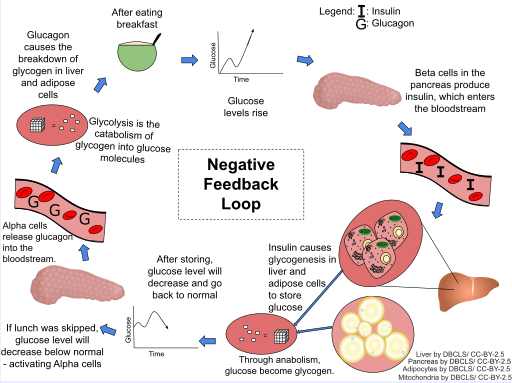
Option C is correct. Glucagon is produced in the pancreas in response to a drop in blood sugar. This hormone causes the liver to break down the reserved glycogen into glucose and release it in the bloodstream to build up the blood sugar level. Thus it is an example of negative feedback to maintain a set glucose level in the blood.
Option D is incorrect. The pituitary gland releases oxytocin in response to uterine contraction; oxytocin causes the uterine muscles to contract even more. This intensifies the contractions till the baby is expelled from the uterus. Thus, oxytocin is under a positive feedback mechanism.
Additional Info